
When a senior’s health needs reach a certain threshold, the conventional response — placing them in a nursing home in Lakewood, NJ or similar facility — often feels like the logical, even inevitable, choice. Facilities offer round-the-clock supervision, professional medical support, and a structured environment. What they cannot always offer is the sense of familiarity, autonomy, and personal continuity that research consistently identifies as critical to the well-being of older adults.
For a significant number of seniors, the transition to a nursing facility does not stabilize their decline — it accelerates it. Understanding why helps families make more informed decisions about when and how to make that transition, and whether alternatives like home health services in Ridgewood might serve their loved one better.
The Psychological Impact of Displacement
Identity for most older adults is deeply rooted in place. The bedroom where a person has slept for forty years. The kitchen where meals have been made and shared. The garden tended across decades. These are not just preferences — they are the environmental anchors of a person’s sense of self.
Removing a senior from that environment — even into a well-staffed, professionally managed facility — severs those anchors abruptly. The resulting disorientation, grief, and loss of personal agency frequently manifest as depression, behavioral withdrawal, and accelerated cognitive decline. Researchers have documented what clinicians call “transfer trauma” — a measurable deterioration in mental and physical health following relocation that is distinct from the underlying condition motivating the move.
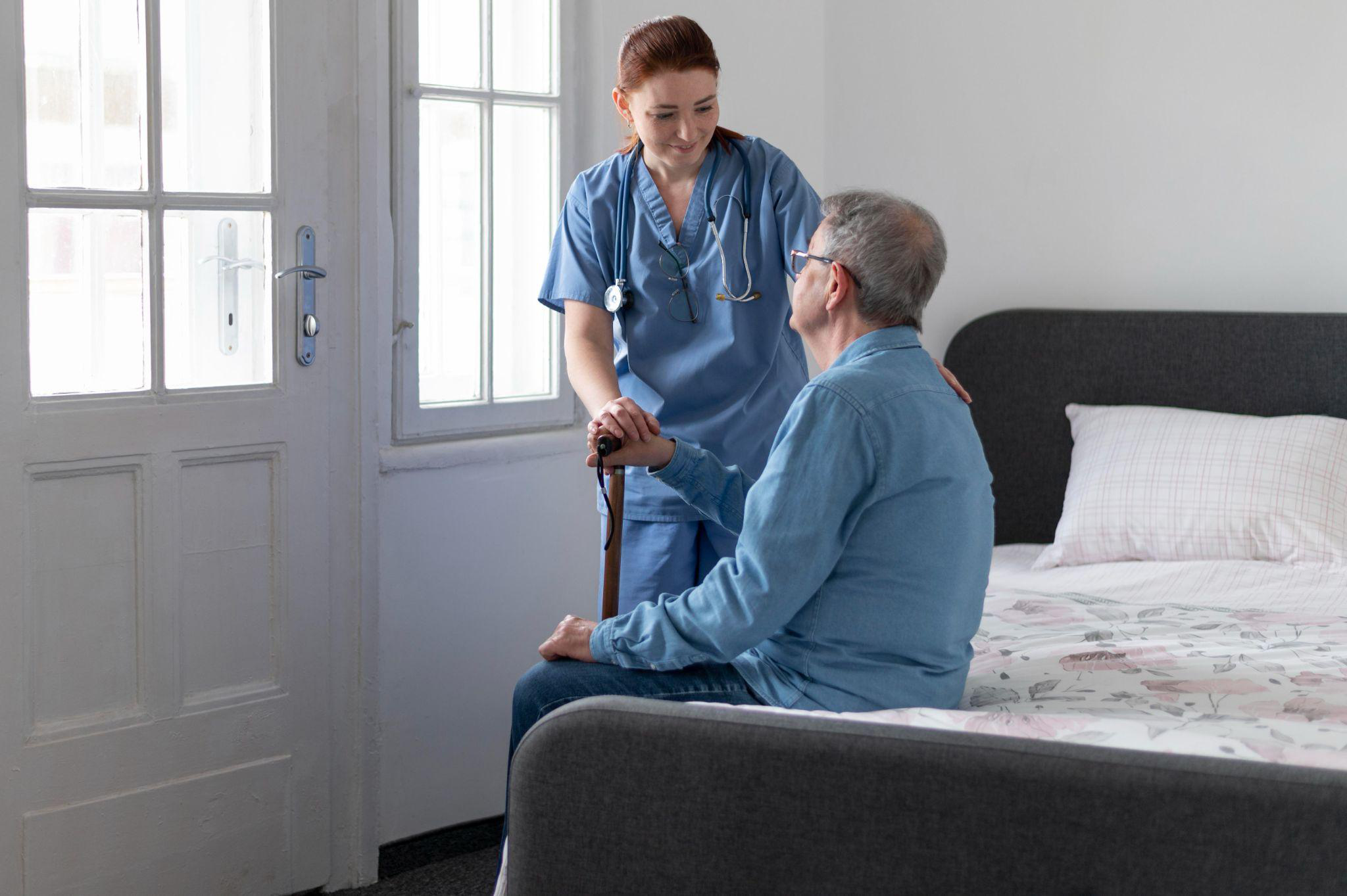
Loss of Routine and Its Clinical Consequences
Structured daily routine is not merely a comfort for seniors — it is a clinical tool. Predictable schedules support medication adherence, nutritional intake, sleep regulation, and physical activity patterns. Facilities, by necessity, operate on institutional schedules that reflect the needs of their entire population rather than any individual resident.
The shift from a personally calibrated routine to an institutional one is particularly disruptive for seniors with cognitive conditions. For individuals with dementia or early Alzheimer’s, familiar cues — the specific sound of a household, the smell of a personal space, the face of a trusted caregiver — are neurologically important stabilizers. Their sudden absence is not neutral. It is actively destabilizing.
What the Data Shows About Home-Based Outcomes
Studies comparing outcomes for seniors with equivalent care needs — some receiving home healthcare in Elizabeth and surrounding communities, others in nursing facilities — consistently show that emotional well-being and reported quality of life are higher among those who remain at home with professional support. Physical health outcomes are more variable, with institutional care showing advantages in specific clinical scenarios, but no consistent edge across broader quality-of-life measures.
The implication for families is not that nursing facilities are never appropriate. They are particularly for seniors with highly complex medical needs that cannot safely be managed at home. The implication is that the threshold for facility placement is often set lower than clinical evidence warrants.
Preserving What Matters Most
Professional in-home care in New Jersey preserves the environmental and relational continuity that facility care, by its structural nature, cannot provide. Consistent caregivers who know a client’s routines, preferences, and personality maintain the stable framework that supports both cognitive and emotional health — often making it possible for seniors to remain home through stages of care that families assumed would require placement.
At 360 Degree Care Inc., we have supported families through some of the most difficult care decisions they will ever make, and we have seen firsthand what happens when consistent, familiar home care is chosen with confidence over institutional placement. The outcomes speak for themselves. Home healthcare in Lakewood and throughout New Jersey, delivered by caregivers who know their clients and stay, produces results that rotating facility staff simply cannot replicate. If your family is currently weighing options and has not yet fully explored what structured in-home care can accomplish, we encourage you to reach out to our team before the decision is finalized. That conversation may change the direction entirely.